ESL "English as a Second Language" in Canada education news about English schools, classes, lessons, study-tips, student visas, homestays, travel tips, student jobs, student prices. English test lessons for TOEFL, TOEIC, IELTS, CELPIP, Cambridge CFA CPC CAE FCA, GMAT, GRE, SAT, LSAT, DSAT, CAEL, Cantest, college board, IH, AP, TSE, YLE, BULATS, ILEC, and Michigan exams. ESL English lessons for work, school, jobs, travel, immigration, university admission, graduate studies, career training.

Tuesday, December 02, 2025

2025 Annual Report to Canada's Parliament on Immigration

 IRCC facilitates the entry of students who wish to study at a designated Canadian educational institution. 

Students approved to study in Canada are issued a study permit.

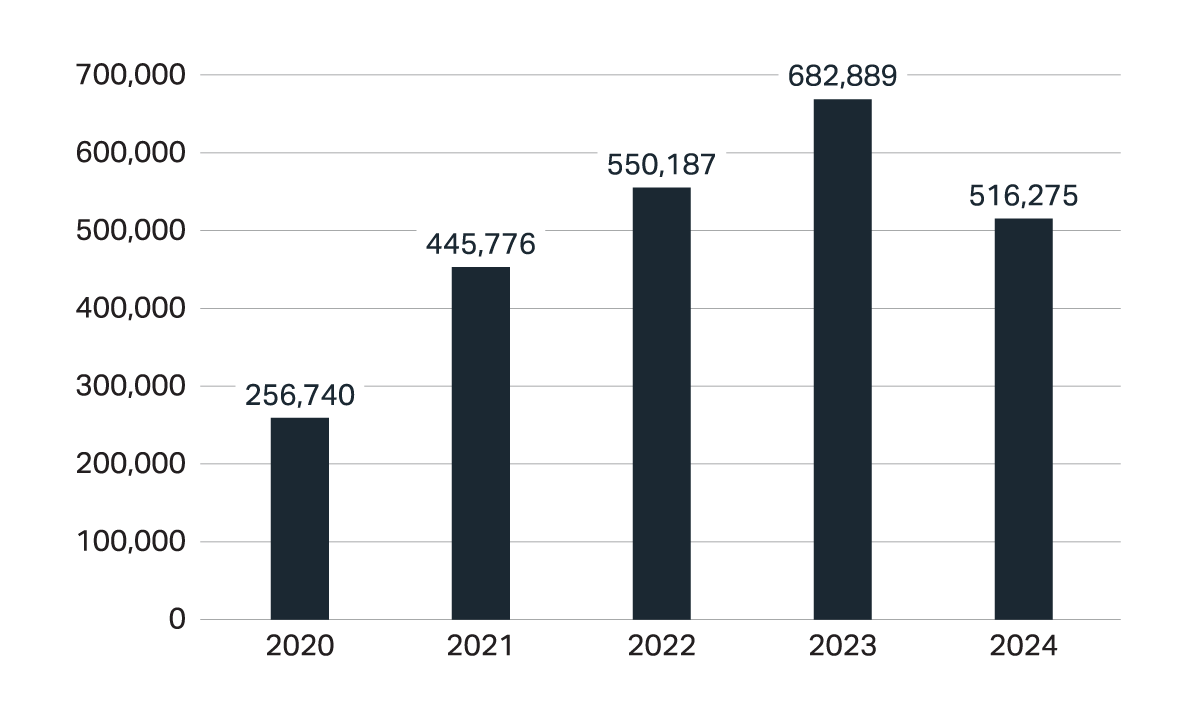
In 2024, 516,275 individuals held study permits in Canada. This included new permits and extensions. Of these, 242,970 identified as women, 273,235 as men, 55 as another gender and the gender of 10 individuals was recorded as unspecified. 

An intake cap on study permit applications was introduced in January 2024 to help manage unsustainable growth in the program, with an issuance target set at 485,000 for that year. Of the 516,275 study permit holders, only 293,835 were issued to new students entering Canada in 2024, with the balance being issued to students already in Canada. 

This means that there were less than 360,000 new study permit holders who entered Canada in 2024.

In 2023, a total of 682,889 individuals held study permits, of which 496,175 were new. This indicates a decrease of 24% from 2023 to 2024. 

Canada’s overall international student population declined by 4% at year end of 2024 compared to end of 2023.


Link to full report


Wednesday, August 06, 2025

Languages Canada Member Schools

About Languages Canada:

In 2007, a joint task force was created. CAPLS and CLC voted to create a new association that would include all public, private, English and French accredited language education program members. A steering committee was formed with equal representation from both associations and a representative from AILIA. In 2008, a set of bylaws and a definitive agreement was approved resulting in the incorporation of the new association, Languages Canada.

Purpose

To be the voice of the Canadian language education sector.

Mission

To promote quality, accredited English and French language education in Canada, both nationally and internationally.

Vision Statement

To be internationally recognized as the symbol of excellence, representing Canada as the number one destination for quality English and French language education.


https://www.languagescanada.ca/en/languages-canada

Thursday, May 15, 2025

Canadian Provinces Manage Education


In BC the Private Training Institutions Regulatory Unit (PTIRU) within the System Integrity Branch (SIB) of the Ministry of Post-Secondary Education and Future Skills administers the Private Training Act and associated regulations. 

Over 60,000 students enroll in private training institutions in B.C. each year. Students are trained for a broad range of occupations from sound and audio technicians to licensed practical nurses to commercial pilots.

The sector is regulated by the Private Training Institutions Regulatory Unit (PTIRU), which is responsible for:

Ensuring institutions meet the requirements and standards for certification
Maintaining a Private Training Institution (PTI) Directory of all certified institutions, along with formerly certified institutions
Providing student protection and overseeing the Student Tuition Protection Fund

Private Training Institutions Regulatory Unit
310-601 Cordova St W
Vancouver BC V6B 1G1
Canada

Local: 604-569-0033
Toll-free: 1-800-661-7441
Fax: 778-945-0606

Email: PTI@gov.bc.ca

Student support inquiries: PTI.StudentSupport@gov.bc.ca

Language Education Excerpts from the Policy Manual

https://www.privatetraininginstitutions.gov.bc.ca/sites/www.privatetraininginstitutions.gov.bc.ca/files/files/policy-manual.pdf#page=8

Examples of programs that do not require approval

 • A career-related program at a registered institution for which tuition is less than $4,000

 • A career-related program at a designated institution for which tuition is less than $1,000

 • A language program at a designated institution that is no more than six months and less than $4,000

 • Any language program at a registered institution

 • A commercial driving instruction program

Programs that require approval 

Programs requiring approval from the registrar fall into three categories: 

Class A: 

Career-related programs with 40 or more hours of instruction, for which tuition is at least $4,000. 

A career-related program is defined as a program that has the purpose of enhancing students’ employability or ability to carry out a career occupation. 

Class B: 

Career-related programs at designated/interim designated institutions, other than Class A programs, for which tuition is at least $1,000. 

Class C: 

Language programs at designated/interim designated institutions that are longer than six months or for which tuition is at least $4,000. A language program is defined as a program that has as its learning objective that students gain or improve proficiency in a language.

Designated Learning Institutions in British Columbia Canada